Set the boundaries.
Decide which actions a system may take and which decisions need a person’s approval.
TECHNOLOGY. HUMANITY. POSSIBILITY.
What can we improve?
What might we lose?
How do we prepare for both?
Technology changes what is possible. It also changes what is expected of us: how we work, where we direct our attention and what we accept as normal. Sanjeewa’s perspective brings opportunity and consequence into the same conversation.
AI READINESS &
THE FUTURE OF WORK
AI readiness begins with understanding the work, the people affected and the decisions that matter.
Digital transformation is a chance to reconsider how an organisation works. Useful questions begin with the problem to solve, the skills people need and how a team will recognise a better outcome.
Preparing for change also means making space for uncertainty. People need opportunities to learn, question the tools they use and help shape how their roles evolve.
QUESTIONS TO TAKE INTO YOUR NEXT CONVERSATION
Name the task and the people it serves. Define what a useful result would look like before choosing a tool: less repetitive work, clearer decisions or a better experience.
Identify who will use the system and whose work it may affect. Make time for learning, feedback and practical support as responsibilities change.
Agree on what to observe in a small pilot. Look at quality, errors, time spent reviewing outputs and the experience of the people doing the work.
HUMAN AGENCY &
RESPONSIBLE AI
An opportunity to question a system is only useful when people can act on the answer.
As AI systems take on more tasks, responsibility deserves careful attention. Who can challenge an output? Who can stop an action? Who answers for the consequences?
For agentic AI—systems that can take actions toward a goal—these questions belong in the design of the work itself.
Read the human oversight perspective ↗
Decide which actions a system may take and which decisions need a person’s approval.
Give people the context, time and authority to question a recommendation or interrupt an action.
Name who will investigate mistakes, support affected people and change the process.
ACCESS, PARTICIPATION
& SUSTAINABILITY
Who gets to participate is part of the technology question.
Language, access to learning and available resources shape the opportunities people can pursue. A human-centred approach asks who is being served, who is missing and what would make participation possible.
This perspective connects Sanjeewa’s interest in low-resource language AI with his priorities around women in IT, underserved children and sustainability. It also invites a wider question: what resources does an innovation use, and what value does it create?
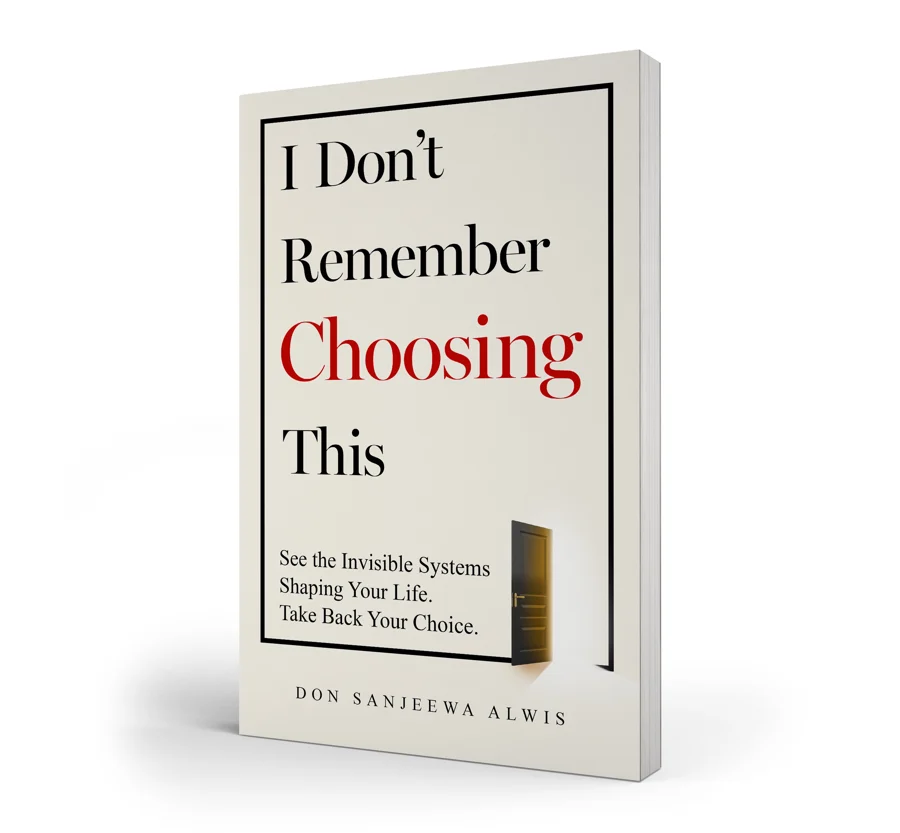
THE QUESTION CONTINUES IN THE BOOK
I Don’t Remember Choosing This explores hidden systems, habitual responses and everyday decisions. It invites readers to notice the influences around them and the possibilities for acting differently.
Read the opening Forthcoming from Ovinway Press · Kindle release: 7 January 2027FROM IDEAS TO CONVERSATION
For conversations about AI, people and the decisions shaping what comes next.
Talk with Sanjeewa